Peptide Quality Assurance & Purity Testing Boc Sciences
Peptide Screening: Hplc & Mass Spec Pureness Overview Apex
BOC Sciences provides thorough peptide testing solutions to customers across markets, making certain items fulfill rigorous market requirements and guaranteeing item uniformity, safety, and efficacy. It likewise supports traceability-- each batch's lab validation record can be connected to its COA and regulatory filings, creating a clear proof. In other words, strenuous laboratory recognition is exactly how you confirm to regulatory authorities that your peptide meets all high quality specifications. It helps avoid conformity issues such as stopped working audits or product recalls as a result of quality issues. This not only satisfies lawful needs yet eventually secures patient safety.- Peptide purity is an essential top quality metric that tells you what fraction of a peptide sample is the intended item versus undesirable by-products.
- Our mission is to sustain scientists with high-purity, verified substances that satisfy the needs of modern clinical research-- nothing more, nothing much less.
- At Maxed Out Substances, every item we supply includes a clear testing record and clear documents.
- It does not turn a research study substance into a clinical item, and it does not change experimental recognition in the researcher's own system.
- Several peptide manufacturers or vendors will supply a COA (Certificate of Analysis), for instance our bpc 157 tb 500 blend, that includes the pureness portion by HPLC and identity verification by MS for each and every batch.
Shop Coa-verified Research Peptides
HPLC tells you what proportion of your example is the main compound-- yet it does not validate what that primary substance actually is. A top with the appropriate retention time could in theory be an associated peptide with similar hydrophobicity. Mass spectrometry offers identity confirmation by determining molecular mass directly. We evaluate peptide size, series structure, expected molecular weight, alteration type, salt form, sample history, and designated downstream usage prior to specifying the logical path.
A practical assay determining downstream signaling-- or a structural study making use of NMR or X-ray crystallography-- requires the highest possible pureness offered. Crystallographers particularly frequently need ≥ 98% pureness since even small pollutants can avoid crystal formation or present condition right into the crystal lattice. As particles exit the column, they travel through a detector-- normally a UV detector set to 214 or 220 nm, wavelengths where the peptide bond takes in light highly. The detector records just how much UV light is absorbed over time, producing a chart called a chromatogram. This overview breaks down what pureness actually implies in peptide chemistry, exactly how it's determined, what the contaminations are, and how to read the documents that shows a peptide is what it declares to be.Imaginative Peptides proposes a series of different pureness levels to help you pick the appropriate peptide pureness for peptide-based assays and applications. The complying with listing reveals the recommended peptide pureness degrees required for various peptide applications. Peptide identification is mostly executed utilizing mass spectrometry (MS), which gives precise dimensions of peptide molecular weight. In addition, methods such as amino acid evaluation and HPLC are used to validate the peptide's identification and pureness, making certain precise characterization for various applications. We provide peptide identity verification using mass-based methods chosen for the example and analytical purpose. This is essential when the primary inquiry is whether the observed part matches the intended peptide or whether a modification has been integrated as anticipated.
Deamidation Items
The table below web links usual project objectives to practical analytical panels and the sort of decisions they assist support. Asparagine and glutamine residues can undertake deamidation, altering the peptide's cost and hydrophobicity. Deamidation is one factor storage space conditions issue, particularly after a peptide has actually been reconstituted. Every product we carry is lab-tested and validated by third-party companions, so scientists understand exactly what they're dealing with. Peptides having methionine or cysteine deposits are susceptible to oxidation. Methionine can be oxidized to methionine sulfoxide; cysteine can form undesirable disulfide bonds or be oxidized to sulfinic or sulfonic acid by-products.
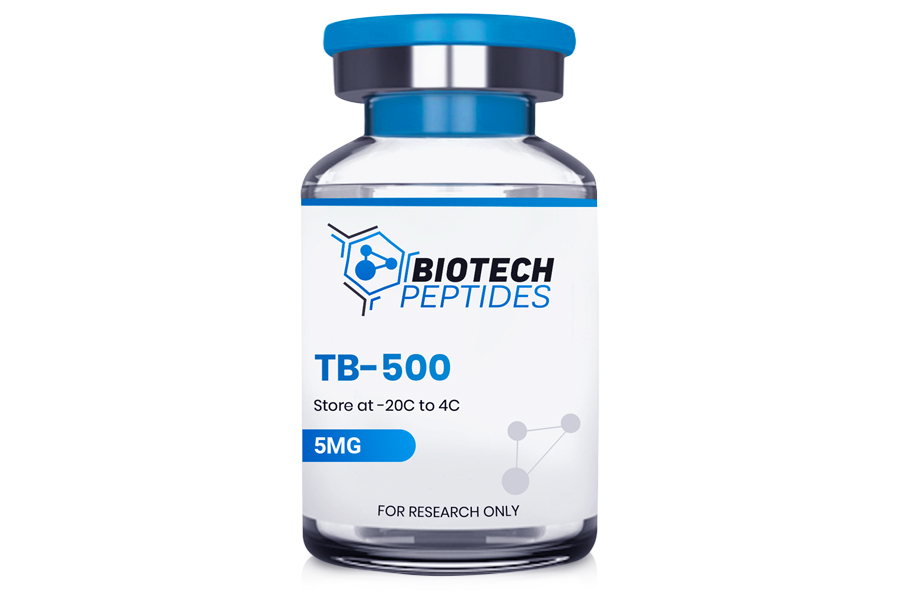
Explore our magazine to check out verified research study substances and discover more concerning our screening and quality control process. Also minor pollutants can modify outcomes, minimize reproducibility, or introduce unwanted variables https://www.4shared.com/office/yuDVFSgxfa/pdf-30257-13263.html right into a research study. Scientists depend upon accurate, verified compounds to guarantee their findings are both legitimate and regular.
In straightforward terms, a peptide noted as 95% pure is composed primarily of the target peptide (95%), with the remaining ~ 5% made up of impurities. These impurities can consist of things like shortened or truncated series, deletion variants, oxidized residues, or various other minor side-products from the synthesis process. Peptides are widely used in the medical aesthetics, cosmetics, and biomedical areas as a result of their unique organic activity and broad application potential. However, the high quality of peptide items directly affects their efficiency and safety and security, making precise high quality screening services important.

Ends · CHANCEUWJJ805